
A tracker I actually stick with
I've started nutrition trackers before and dropped them within a week. I'm not good at sticking with things that ask for daily effort, so this time I built one around that fact instead of pretending it away.
Four things mattered more than anything else.
Useful. Logging a meal takes seconds: a photo of a plate, a barcode scan, a photo of a full receipt, or just typing "two eggs and a coffee." An AI reads it, but nothing is saved without me confirming it first.
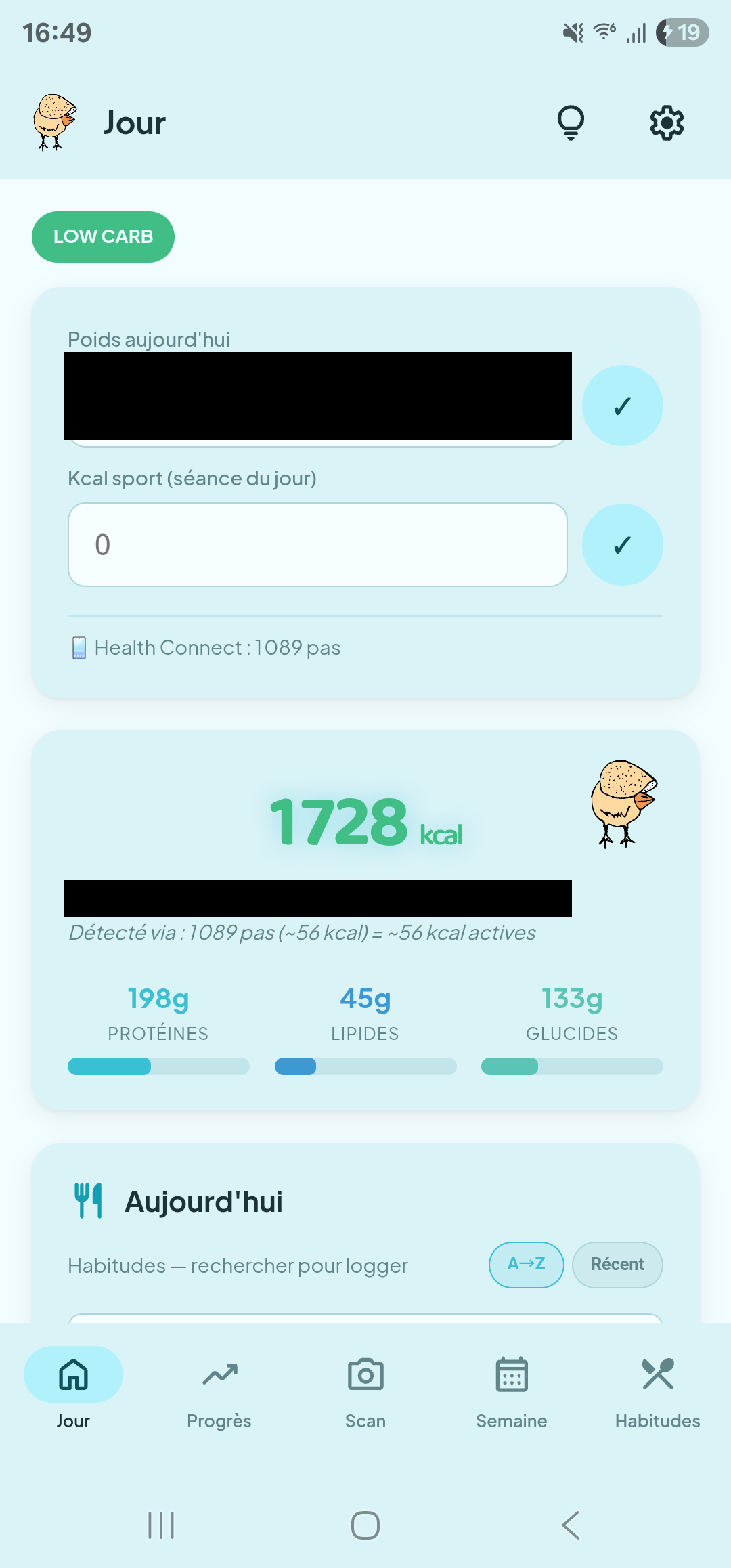
Secure. No account, no cloud by default. Everything stays local, encrypted. Backup is an explicit, optional connection to my own Nextcloud — never automatic, never silent.
Free, on purpose. I didn't want a subscription, and I really didn't want to pay one to an app whose actual business is probably my data. There's nothing to sell here — no ads, no analytics, no account to monetize. That's not a feature I added, it's a business model I refused to have.
Responsible. The app says plainly what it isn't: not a dietitian, not a doctor. Any AI-generated advice is restricted to citing recognized public-health bodies (ANSES, HAS, EFSA, WHO) and is told never to invent a figure.
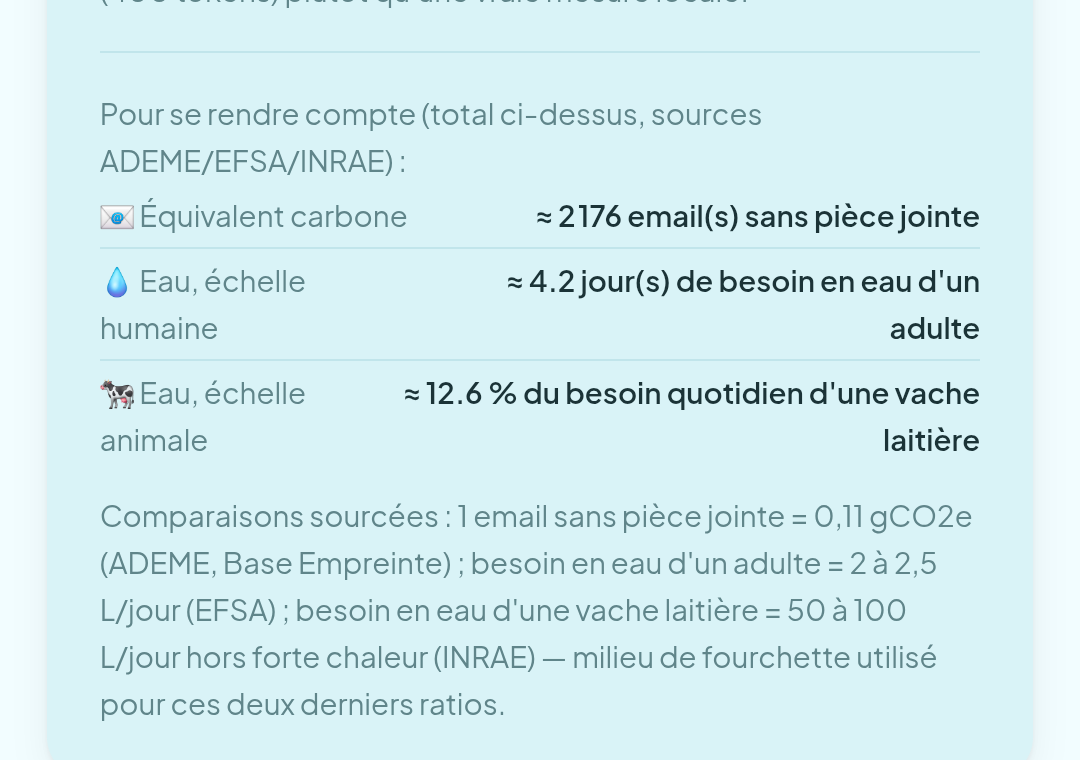
Informative — including about itself. It now tracks the estimated carbon and water footprint of its own AI use, based on Mistral's published life-cycle study, and turns it into comparisons that actually mean something.
No streaks, no gamification, no guilt. Less friction and more honesty turned out to be what I needed — three weeks in, I'm still using it every day.
Not commercial software — built for myself, published in case it's useful to someone else too.
Repo: carbs-android-app — GPLv3.
Member discussion